Don't Touch My Hair: How Black Women Got Themselves a Seat at the Table
Introduction
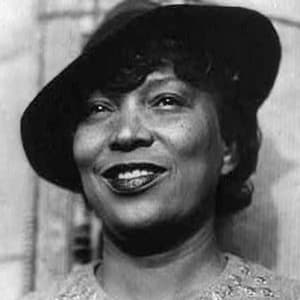
Zora Neale Hurston was known to have said that the black woman is the mule of the world. This statement unfortunately wasn’t just a pithy quote for one of her novels, it was a sober description of the world as it stood when she said it, and it holds true even to this day. This statement describes the many ways in which black women bear the burden of not only oppression, but of those who are oppressed, as they are expected to and often do care for black men and their own black children.
Now, the entirety of the black female experience is not degradation, but much more of it contains systemic degradation than one would think. Therein lies the issue; a black woman’s status in the world and in this country is not accidental, it is systemic, and maintained by a network of oppressive laws, ideas, practices, and values which are intended to keep her down. Part of these issues are tied to something that is part of black women’s self and identity: their hair. In American society, there is a history of black women’s hair being policed, criticized, restricted, and controlled by the desires of a white supremacist American society. From this specialized form of oppression, a new movement was born to combat it, which was largely successful. This was the Natural Hair Movement, a movement whose success was based in its focus on changing society through popular culture. Herein is an attempt to examine why exactly the Natural Hair movement was so successful in its goals and what aspects of their rhetoric and argumentation for their cause made what they were saying so effective rhetorically.

When speaking of rhetoric, it is worthwhile to discuss the father of Western rhetoric, Aristotle, and what his thoughts on the topic are. In his landmark text On Rhetoric, Aristotle lays the groundwork of his theory on what rhetoric and good rhetoric is rather formulaically. Aristotle identifies rhetoric as a skill which can theoretically be built or learned, and is intimately related to dialectic, but is distinct from it, with their commonality being that they are both ways to supply arguments. Their main distinction seems to be the opposition which Aristotle discusses and the idea of victory over another argument, i.e. that in rhetoric one side is correct, whereas in dialectic both sides come to a third truth which is the best parts of both arguments. Dialectic refers to the process of idea and decision making which consists of taking one idea and the set of arguments that come with it, and it’s opposite and the set of ideas that come with that, and combining the two to come to a third belief or idea that is theoretically closer to the truth than either idea. He describes three different major kinds of rhetorical appeal in his text, namely ethos, pathos, and logos. Ethos refers to either an appeal to morality or the trust an audience has in their speaker because of their character, which can either be inherent to the one speaking or be gained and established through argumentation. Pathos is an appeal to emotion, using rhetoric to stir the feelings of your audience and sway them to your side that way. Logos refers to an appeal to logic and reason, attempting to use facts or data or logical reasoning to convince an audience of the truth of your position. These are the three main methods of rhetoric Aristotle describes, which can form the general basis of rhetorical thought (Kennedy).
The Natural Hair Movement began in the 2000s in the United States, and its central goal is to encourage black women to wear their “natural” or afro-textured hair. While many take the movement at face value and consider it a movement about literal hair, the movement is truly attempting to create cultural spaces for black women to exist as themselves in a way mainstream society does not allow them to. It ties into movements that attempt to legitimize the black experience largely through redefining the cultural meanings of natural hair, and had an end goal of eliminating the policing which occurs to and around black women’s bodies. In a sense, the Natural Hair Movement is a hyper-focused type of feminism, and expresses a lot of its rhetoric artistically, and has been able to revolutionize the black hair industry by focusing their outreach and context through artistic means such as film, documentary, and visual art. It also seeks to change the common black experience of hating your appearance, by changing the idea that the hair that grows out of your head is inherently ugly, and has ties to body image movements in this way as well. The Natural Hair movement is at its core a movement about changing hearts, minds, and thinking as a way of changing the world.
Background/Groundwork
On top of institutional discrimination which black women face as a result of a history of oppression, which carries on into the present day, manifested in the discreditation of their womanhood and personhood which results in the specific policing of their hair, specifically in the workplace. This discrimination is often enforced by workplace dress codes, which specifically target women of color and their hair. In the military certain hairstyles on women are restricted, with their policies stating that “Unauthorized hairstyles now include twists, dreadlocks, Afros and braids that are more than a quarter-inch thick – styles commonly worn by many African-American women” (#teamEBONY). These are the way institutional prejudice against black people and black women specifically directly and negatively impact black women in the modern day. According to Paris Chanel, make-up artist and writer for The Vinyl Bridge, “Black women are twice as likely to feel pressure to straighten their hair in the workplace than white women, according to a study by the Perception Institute. Despite being from different racial backgrounds, most of the surveyed participants showed an implicit bias against black women with natural hair. ‘Far too often, black people are shamed and excluded from jobs or school because of objections to natural hairstyles, but courts have been slow to recognize that bias against natural black hair is a form of race discrimination,’ Ria Tabacco Mar, ACLU senior staff attorney, said in a press statement” (Chanel). This pressure doesn’t come from nowhere, and certainly isn’t unfounded. According to Aviva Shen, writer for ThinkProgress, “While the Army traditionally dictates stricter appearance standards than most, plenty of civilian companies and schools have also used hair to discriminate against black women and girls. Eight-year-old Tiana Parker and 12-year-old Vanessa Van Dyke are just two students who were threatened with expulsion from their schools if they did not change their hair. Another woman with natural hair, Ashley Davis, was fired from her job for refusing to cut her dreadlocks” (Shen). There is a real and present societal pressure against black women wearing their natural hair, real consequences for choosing to wear your hair natural, and this stems from the societal pressure and oppression which the face in other aspects of their lives as a result of historical oppression.
All of these factors lay the groundwork for something like a Natural Hair Movement, a movement focused on uplifting black women and allowing them to take pride in their hair and appearances. Indeed, the constant degradation of black people in America gave rise to the Black Power movement, which was in many ways a precursor and predecessor to the Natural Hair Movement. This movement emphasized racial pride and the financial and economic empowerment of black people in America, and sought to create cultural and political repositories for black people. It focused on achieving self-sufficiency within black communities and establishing black owned businesses within black communities, and the movement peaked in the early 1970s. It is during this time period when we see Cicely Tyson doing what would eventually form the groundwork and philosophy of the natural hair movement. She dared to wear her hair natural in a time when a woman doing such a thing was unfathomable. She wore her hair natural in the films Sounder, The Autobiography of Miss Jane Pittman, Roots, A Woman Called Moses, and The Trip to Bountiful to name a few. Her being willing to wear her hair natural had immediate and powerful results, kicking off the natural hair trend, which she describes on Oprah’s Masterclass saying, “Then there was George C. Scott who asked my agent to send me in to meet with them for East Side/West Side. I said ‘Well, what do I do about my hair?’ They said, ‘Your hair? Leave it that way.’ And that is what created the natural hair craze. That show and my wearing it that way. I got letters from hairdressers all over the country telling me that I was affecting their business because their clients were having their hair cut off so they could wear it like the girl on television” (Chanel). This methodology of representation causing societal change and self-acceptance forms the groundwork and basis of what would eventually become the Natural Hair Movement.
With the state of black womanhood laid out thusly, we can see that black women in America could certainly use some uplifting. At the start of the Natural Hair Movement, there were numerous issues with black women and the American establishment centering around their hair. Chris Rock’s film Good Hair begins to establish this tension, describing the state of black women and their hair at the time of filming. Rather, Regina Kimbell’s My Nappy Roots: A Journey Through Black Hair-itage establishes this tension. There is some controversy surrounding these two films, as there are allegations that Chris Rock wholesale stole the concept and content of his film Good Hair after a private screening of Kimbell’s My Nappy Roots (Harris), and it’s not hard to see where these claims are based. While Rock’s film was nominally informative, it felt very hollow, didn’t make any insight into the topics it covered, and didn’t seem to take the entire conversation surrounding this political issue very seriously. My Nappy Roots, on the other hand, was an ambitious project which sought to chronicle the 400 year history of not only the word “nappy,” but the cultural significance and narratives surrounding the word and black people’s hair in general, as well as its relationship to black people’s sense of self-worth and ability to navigate cultural spaces. The film looks at Afro hair culture beginning in Africa and spanning all the way to its own contemporary 2005, and is often considered the definitive film on black hair’s history, it’s cultural significance, and the industry surrounding it.
Case Studies and Analysis
Rock’s Good Hair is essentially a failure of rhetoric; it makes no claims, and does not have enough of a guiding theme to provide much in the sense of ethos or logos, as rock doesn’t seem to actually have much of any point to make in this film. There are moments of ethos, especially in the narrative about the hair competition, but it doesn’t relate to any argument that Good Hair is trying to make. There is some ethos in the interviews with black women, especially at the end where Rock makes the closest thing to a statement the film approaches, where Rock says that hair empowers black women to make something for themselves, and that his daughters’ hair is nowhere near as important as their intellect. These are both true and cogent statements, but it dismisses the premise of the argument, that there is indeed a problematic aspect within society and black women’s relationship to their hair. In this sense, Good Hair fails rhetorically in expressing the views that would create the Natural Hair movement, and seems almost to be a reaction to the movement from a contemporary right before it started. The way that the people he interviews discuss the topics surrounding the movement, like more openness about weaves and wigs amongst black women, make it seem that the conversation around black women’s hair and its place in society is beginning, but the conversations with young women who describe natural hair as unprofessional, ugly, and ill-suited for the workplace reflect the societal conditions that prompted the movement.
When Chris Rocks daughter, Lola, came up to him crying and asked, Daddy, how come I don't have good hair? the bewildered comic committed himself to search the ends of the earth and the depths of black culture to find out who had put that question into his little girl's head!
Good Hair still occurs right before the actual work of the Natural Hair Movement begins, and it contains within it the seeds of this movement almost despite itself. When the actresses interviewed begin to discuss the ridiculousness of the hair that grows naturally out of their scalp being political and the woman who chooses to be bald after alopecia instead of wearing wigs in order to claim her personal beauty and strength tells her story, we begin to see how the ideas of the movement are planting themselves within society and taking hold. This is the groundwork laid and later developed by My Nappy Roots, which handles the topic in a manner far more rhetorically sound.
My Nappy Roots does not simply display the state and history of society’s relationship with Afro textured hair, it contextualizes it along the narrative of slavery and blackface, and describes how the word “nappy” exists not only to insult, but to objectify and subjugate black people, especially black women. The rhetoric of this film established the Natural Hair Movement as it existed in its era and in many ways still does to this day. Immediately the film established a strong sense of logos within the audience with the vast and impressive amount of research done within it. Covering four hundred years of history is no small task, especially since African American Diaspora studies were and still are underprivileged within Western academia, and is therefore harder to find established scholarship on.
My Nappy Roots is the first to posit that the term “nappy” arises from associations between black hair and the cotton that enslaved Africans and their descendants were intended to pick, associating them with property and their value with their ability to produce, as well as creating an illusory connection to their inherent genetics which made their hair grow a certain way and their station within slave-era American society. The film looks at how the creation of a European standard of beauty makes it so that black women must measure up to that standard of appearance, which is an impossible standard when one’s hair physically cannot grow in the way that is required to be “beautiful,” in an era where for a woman to be beautiful is the same as being worthwhile.This film simultaneously sets the precedent for what would become the primary means of both rhetoric and efficacy for this movement, which is art, media, and personal narrative. The brunt of the work of the movement was creating representation of natural hairstyles and beauty on black women, which contained powerful arguments in favor of greater acceptance of black women and their hair and bodies as they existed, which eventually caused the massive cultural changes we’re beginning to see in the modern day.
Indeed, we are beginning to see change in the modern day. Restrictions on and discrimination against natural hairstyles in the workplace are beginning to go away; New York banned such discrimination in February of this year, and the military is headed that way as well (Deck). Society is beginning to see an end to a time when a woman can be fired for wearing her hair as it grows out of her head, and people are beginning to call out discriminatory and critical statements against black women who wear their hair natural, and it is all a result of the work of the Natural Hair Movement.
At this point it is necessary to establish how the Natural Hair Movement manifests in the modern day. Its goals have thus far been made clear, and the conditions it seeks to redress and has done some good work in redressing, but how does this movement manifest in everyday life, how does its rhetoric make itself known to the society it’s trying to change? In the modern day, the Natural Hair Movement exists primarily in three ways; social media, broadcasting media, and artistic media. The use of hashtags, movies and film, podcasts, music, and even ad campaigns have allowed the message of the movement to not only be widespread but accessible and easily understood by many. The use of mass media and consumable media to communicate these values was incredibly rhetorically sound because it made the values that the movement was introducing both accessible and digestible for the average individual. The condensed format of these mediums condensed the argumentation proponents of the movement could make, forcing them to use more evocative methods to convince people to be on their side, and to use rhetorical tools which would be received more positively such as humor, personal narrative, and art forms like film, theatre, and music. In recent times, the movement’s efforts have begun to change the culture in meaningful ways, changing the conversation around discriminatory workplace dress codes, discouraging people from touching or criticizing black women’s hair in a way that dehumanizes them and discredits their personhood, and even changing the culture around natural hair, allowing more and more black women to feel comfortable wearing natural hairstyles without criticism. In terms of how this rhetoric manifests, the film Nappily Ever After and the song “Don’t Touch My Hair” by Solange Knowles exemplify the rhetoric used by the movement which allow these significant cultural shifts to occur.
Nappily Ever After is a 2018 Netflix original movie which fits squarely within the Natural Hair Movement’s rhetoric. The film is steeped in the culture, tradition, and rhetoric of the Natural Hair Movement, being based on a book that was written in 2000 by Trisha Thomas. The movie is about a high-powered executive woman in marketing named Violet who has always based her entire self worth on her ability to get a man and the condition of her hair. After a setback in her relationship, she decides to shave off all of her hair one night, much to her horror the next morning. She, like many black women of today and of past years, has been taught that straightened, more European looking hair is “good hair,” and that her natural hair texture is undesirable and ugly. The movie takes us through this mindset by establishing the importance Violet places on her hair and having that hair not only be ruined, but having her shave it off and learn to love herself as a result by embracing her natural hair.
This movie encourages women to take control of their hair and its presentation by presenting her as happier and lovelier when her hair is short and natural, as opposed to when it’s straightened or when she has a weave in. The film uses visual rhetoric to change the narrative and representation of women with natural hair from depictions of women in poverty or slavery, which hitherto had been the main way of representing such women, to an image of an empowered woman who stands up for herself and for other women, especially when she challenges her male supervisors for maintaining sexist ad practices when she quits and when she expresses support for black women wearing their hair however they want at the end of the movie. This presentation acts as a new paradigm for the viewers, establishing both pathos and ethos by showing that there is a vision of black women with natural hair that works, and is beautiful, and is inspiring. This movie creates an aspirational figure for young black women, which is a powerful tool for empowering black women to not only love themselves as they are, but to be loved and respected, because it also shows people who aren’t black women that natural hair is beautiful and that women who wear their hair natural are intelligent, powerful, professional, competent, and deserving of respect.
Solange’s song Don’t Touch My Hair also does some phenomenal work within the Natural Hair Movement. Solange Knowles immediately enters the black community that is listening to this song with strong ethos; she is a notable figure within the music industry for her work writing songs for her sister, Beyoncé Knowles’ group Destiny’s Child, and for her work as the singer for the “Proud Family Values” cartoon’s theme song, as well as he acting and modeling work, notably for her role in Bring it On: All or Nothing and her work as the face of Rimmel London, Michael Kors, and as an ambassador for Giorgio Armani. She has a positive reputation and this goes into the argument she makes in her song, and the album, “A Seat at the Table,” as a whole. This song is an anthem for the Natural Hair Movement, embodying a narrative for respect for black women and a recharacterization of natural hair as a symbol of the black struggle and culture, which shows the history of the black people and the beauty of their culture. We can see this when she sings “Don’t touch my hair / When it’s the feelings I wear / Don’t touch my soul / When it’s the rhythm I know / Don’t touch my crown / They say the vision I've found / Don’t touch what’s there / When it’s the feelings I wear / They don’t understand what it means to me / Where we chose to go / Where we’ve been to know” (Solange). She transforms natural hair, which has been hitherto characterized as ugly, nappy, and unprofessional as a crown of glory representing everything that should make one proud.
Takeaway
The Natural Hair Movement has leveraged its use of popular media to pack a major punch in the world at large, and their efforts have begun to affect positive change. By and large, more and more black women are comfortable wearing their natural hair, and the movement has created a culture of people who not only support, but celebrate this change, and the numbers support this. According to Aviva Shen, contributor to ThinkProgress, “chemical relaxer sales dropped 26 percent from 2008 to 2013, according to consumer trends firm Mintel, and 70 percent of black women say they wear or have worn their hair natural” (Shen). We can see this again through the hashtag #blackgirlmagic on Twitter and other social media platforms, where black girls can post pictures of their natural hairstyles or of themselves just being successful doing things like graduating med school or passing the bar or graduating. A movement and culture exist now that celebrates black women and their successes in their natural hair, that uplifts the black woman, and it also has made tangible change in societal policy. More and more workplaces have removed their prohibitions against natural hairstyles, and in the past year New York City has made an official ban on all discriminatory hair policies, in a positive move forward, and other places nationwide are following suit (Deck). A movement that expresses its rhetoric through art has a powerful and more immediate means of reaching an audience and affecting change, partly because of the nature of art to change those who view it and shape their worldview. For this reason, the Natural Hair Movement has been a resounding success, and will hopefully continue to be one into the future.
Works Cited & Other Resources
Chanel, Paris. “How Cicely Tyson Inspired the Natural Hair Movement.” The Vinyl Bridge, www.thevinylbridge.com/2014/09/12/how-cicely-tyson-inspired-the-natural-hair-movement.
Blee, Kathleen M. “Women in the 1920s' Ku Klux Klan Movement.” Feminist Studies, vol. 17, no. 1, 1991, pp. 57–77. JSTOR, JSTOR, www.jstor.org/stable/3178170.
Deck, Jerica. “New York City Is Making 'Hair Discrimination' Illegal.” Global Citizen, www.globalcitizen.org/en/content/nyc-bans-discrimination-black-natural-hair/.
Dionne, Evette. “Many Famous Suffragists Were Actually Working to Advance White Supremacy.” Teen Vogue, TeenVogue.com, 18 Aug. 2017, www.teenvogue.com/story/womens-suffrage-leaders-left-out-black-women.
Good Hair. Directed by Jeff Stilson, Chris Rock Productions, 2009.
Harris, Lew. “Chris Rock Sued for Ripping Off Hair Doc.” TheWrap, 7 Oct. 2009, www.thewrap.com/chris-rock-sued-ripping-hair-doc-8347/.
Kennedy, George A. Aristotle: On Rhetoric: A Theory of Civic Discourse. Oxford University Press, 2007.
Martin, Nina, and Renee Montagne. “Black Mothers Keep Dying After Giving Birth. Shalon Irving's Story Explains Why.” NPR, NPR, 7 Dec. 2017, www.npr.org/2017/12/07/568948782/black-mothers-keep-dying-after-giving-birth-shalon-irvings-story-explains-why.
My Nappy Roots: A Journey Through Black Hair-itage. Directed by Regina Kimbell, 2008.
Nappily Ever After. Directed by Haifaa al-Mansour, Netflix, 2018.
OutsideHollywoodLand. “My Nappy Roots: A Journey Through Black Hair-Itage.” IMDb, IMDb.com, 11 Apr. 2010, www.imdb.com/title/tt0441779/?ref_=adv_li_tt.
Shen, Aviva. “Soldiers Say Army's New Hairstyle Bans Are Racially Biased Against Black Women.” ThinkProgress, 1 Apr. 2014, http://thinkprogress.org/soldiers-say-armys-new-hairstyle-bans-are-racially-biased-against-black-women-8f34febd813e/.
Solange. “Don’t Touch My Hair.” A Seat at the Table, Saint Records, 2016.
Wheat, Alynda. “Good 'Hair?' Hardly. How Chris Rock Gets It Wrong.” EW.com, ew.com/article/2009/10/12/good-hair-hardly-how-chris-rock-gets-it-wrong/.
Read the full text of the longer essay here!